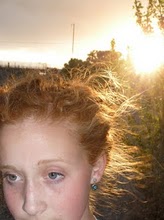
 I recently had the pleasure of interviewing Elena, fifteen-year old writer, pianist, hopeful composer, and listener. Elena is the author of the popular classical music blog Neo Antennae as well as guest blogger at the Christian Science Monitor. I was particularly interested reading her advice to teen pianists and their teachers.
Why “Neo Antennae”?
When I first decided I wanted to blog, I wasn’t sure what I wanted to focus on as a writer. Reviews, comparisons, essay like pieces, or even advice popped into my head. I didn’t want to restrict myself to a specific medium, so I chose a title that allowed me to do that. “Neo Antennae” in my mind means “new perceptions.” The prefix “neo” means new, and I think antennae are a perfect item for all-encompassing perception.
How do you divide your time between piano and writing? Which is your first love?
That’s a hard question! I’ve been playing piano for much longer than I have been writing about music, but I’ve loved writing since I was little as well. If I had to chose a first love, it would be piano simply for the fact that it was the activity that introduced me to music. Playing piano satisfies my craving for getting out the music inside of me, but writing makes me feel more connected to the world of music. Dividing my time is definitely difficult, but it’s something that makes me stop and think about my priorities, which is a good exercise. Piano is something I can practice in either longer periods of time or short spurts. But to write one post, I have to research, listen, and work for hours in a row. It just boils down to balance.
Do you improvise or compose your own music?
I started to improvise and compose more once I got over the initial intimidation. I wouldn’t give myself the full-on title of “composer,” but I have written a horn quartet, a viola and cello duet, and I’m working on a string quartet. And it’s almost impossible not to take a break from practicing pieces and mess around. At first, I thought improvising was only for the jazz masters. But then I realized anyone can do it, and it doesn’t have to be jazz. I personally enjoy improvising in more of an impressionist way, even if I only do it when I’m by myself!
Twitter or Facebook? Which is more useful to you?
In a social sense, Facebook is more useful because of the different methods of communication. When it comes to music, Twitter is more useful because I’m able to connect with people I admire without having to know them personally. Plus I can type cool things like “RT” and “#.”
Your blog has been mentioned by Grammaphone Mag and you’ve had guest posts in major newspapers/magazines. What do you credit this to? Social media? Traffic-building for your blog?
Though traffic-building and self-promotion are definitely helpful, one of the things that has helped me successfully start my writing is my age. Though it is not the only thing that makes my blog unique, the fact of the matter is that classical music these days is a business mostly comprised of adults. Hopefully, though, my age is only something that initially attracts people to my writing. I want the words, not the author, to be the reason people read my pieces. I think a reason my articles themselves have gained attention is because I spend a good amount of time on each and every one. Blogging is an activity that really varies in style, and it’s easy to just type anything and post it. I try to keep a consistent quality in the things I publish. Usually this means research, drafting, editing, and lots of listening. I actually was connected to Gramophone magazine through an unrelated email I sent to their editor, James Inverne, before I started blogging. Somehow they found my blog and realized it was me!
What are your plans for college? Long range goals?
Trust me, I can’t wait for college! I can certainly do a lot of self-teaching and learning from the people I meet in my life, but I get excited about the things I will learn in college just thinking about them. I plan on majoring in music, so colleges like Oberlin, Columbia, Eastman, Yale, or UC Berkeley would be amazing. I would also love to major in journalism or English, so Northwestern, Kenyon, or UC Berkeley (again!) are also at the top of my list. Those are my dream schools. Until college, I hope to keep writing, listening, and expanding my horizons. I would love to become a trusted source for music journalism. Oh, and being the chief music critic of the New York Times eventually would be nice too! But my main goal is to make others fall in love with music like I have. It’s so comforting to have something to feel passionate about, and I want others to feel the same way.
Who are your idols?
When it comes to piano, no one can beat Martha Argerich in my opinion. She plays some of my favorite composers like Debussy, Ravel, and Prokofiev with ease and grace. Valentina Lisitsa also blows me away with whatever she plays, as does Ingrid Fliter, the Argentinian pianist who I became obsessed with when I was 13. My other music-related idols are Alex Ross, Anne Midgette, Nico Muhly, John Adams, and Missy Mazzoli. Am I allowed to have more? Natalie Portman, Alice Waters, Esperanza Spalding…
Favorite type of music? What’s on your iPod right now?
When it comes to classical, the NOW Ensemble’s CD “Awake” is something I can’t really go a week without listening to. The piano music of John Adams played by Ralph Van Raat is my personal Holy Grail for Adams. I also have to have my daily dose of other genres. The artist The Tallest Man On Earth, the indie/world music band Beirut, and the ambient folk group Bon Iver are three of my favorites. I also love hip hop, so I have the songs of Lupe Fiasco, Talib Kweli, and J. Cole memorized. I’ve also just gotten into James Blake. His voice is creepily amazing, and his electronic compositions are so subtle yet obviously complex.
What exactly is the Church of Beethoven?
The Church of Beethoven is an organization in Albuquerque (where I live) that I’ve been volunteering with for about a year and a half now. It’s a weekly concert series put on by musicians in the area and beyond that takes place during Sunday mornings. Each week, music and some sort of spoken word are performed. While the music is usually classical, we’ve had a beatboxer, jazz, a didgeridoo, folk, and many other moods of sound. The spoken word varies as well from poetry to short plays, storytelling, or slam. It’s set in a warehouse downtown that functions as an art gallery/coffee shop/concert venue during the week. However, the essence of the Church of Beethoven is hard for me to express in words, because it’s so much more than just a concert. While not really a church, it’s a community that brings people together, whether they love classical music or not. My technical duty there is making coffee (and I performed there in January–the videos are up on YouTube if you search “Elena Saavedra Buckley”), but I get so much more out of it–finding a community where you can feel comfortable in your element is a huge part of finding out what you love.
What advice would you give the teenaged pianist who is just starting out with piano lessons?
One of the things that can get frustrating as a beginning piano student is the desire to play everything before you actually can, especially as a teenager, because I know I’m a very impatient one. It’s very important to realize that every step you take, no matter how seemingly insignificant, helps towards your ultimate goals. I’m not a huge Bach fanatic, but I found that when I was learning China Gates by John Adams, the skills I learned in Bach’s two-part inventions helped significantly. I was grateful that my piano teacher pushed me to learn those counterpoint exercises! Stay patient and keep listening–finding piano music you absolutely love is key.
What advice would you give the teacher of the teenage student?
Something that I’m thankful for is a teacher who listens to me. Teenagers have been exposed to a larger world of music than younger students, and therefore they usually know what type of music they would enjoy playing. It is certainly important to learn key repertoire pieces and works that build technique, but it’s very easy to become bored and frustrated as a teenage student if one is being forced into music they do not enjoy playing. If a student leans towards jazz and improvising, they should be encouraged. If a student gains a knack for minimalist music, it would be inspiring for them to work on a piece like that.
Teenagers today, though they are typically thought of as opposed to classical music, are more open than one might think. Of course, I do know teenagers that hate classical music, but I know plenty who have either large or small interests in it. Since so much of what teenagers are interested in is influenced by the people they are around, it’s logical that one’s interest or disinterest in listening to music or taking piano lessons is shaped by the people they know and their role models. Truthfully, if I hadn’t had met the inspirational musicians in my area who introduced me to modern music and composers like John Adams, Olivier Messiaen, or David Lang, I wouldn’t be as eager about classical music as I am today. If I didn’t listen to the piano music of these composers I idolize, I wouldn’t be motivated to play anything except the obvious. One of my friends who plays mostly jazz piano knew that I loved Debussy. He started to play a Debussy piece, but got a little frustrated. But, after we talked about Debussy for a little while, he started to get the hang of it. I could feel his excitement rise. Another one of my friends and I went to a concert where we heard Brahms’s Sonata No. 2 in A Major for violin and piano played by some musicians we admire. She immediately went and bought the music, and now knows a large amount of the sonata. A teenager piano student certainly has the same tendencies. Not only does good technique and discipline matter in the success of a piano student, but the people they meet do as well. Relationships between students and teachers or students and other musicians can lead to performance opportunities, ideas for pieces to play, or information about concerts to go to (which certainly inspire me). In piano lessons, teenagers should not be afraid to ask their teachers about composers, musicians, or pieces that they find interest in. It may be scary to put yourself out there, but what’s the worst that could happen? Beginner piano students can set great foundations by doing this. Research some composers you know and figure out what type of piano music catches your interest. Once you start developing basic techniques, see if those composers have written any beginner music or if their tougher pieces have been simplified. Start going to concerts and talking about them with your teacher. Before you know it, you’ll feel immersed and comfortable in a world that can only grow.



 AllPiano